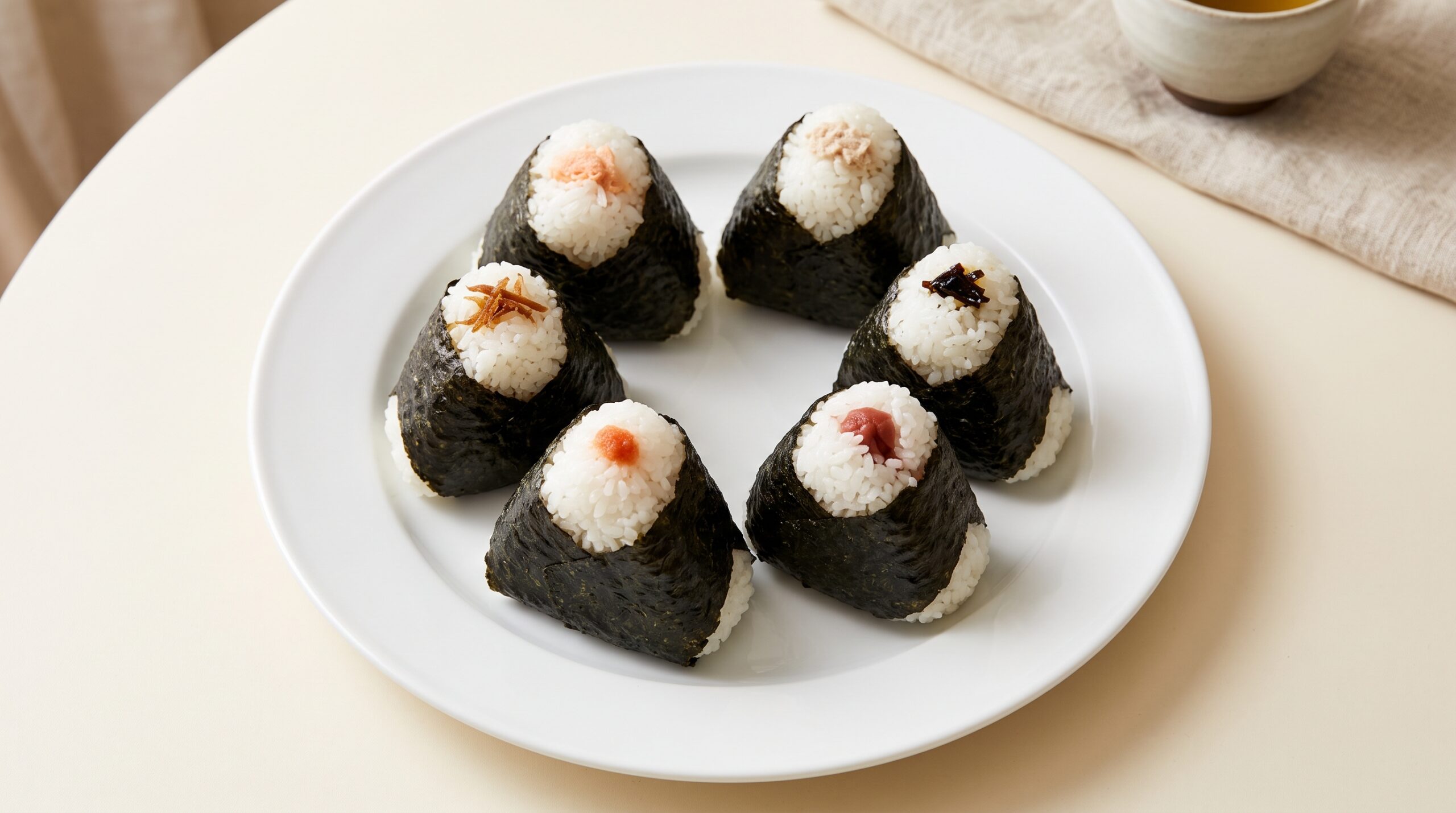
Open the chilled food case in almost any convenience store in Japan and you will find rows of onigiri: compact rice balls, often wrapped in crisp seaweed, ready for breakfast, a quick lunch, or a train ride.
For first-time visitors, onigiri is one of the easiest everyday foods to try. The packaging can look confusing, but one bite can bring together soft rice, a satisfying filling, and crisp nori. Flavors range from gentle and familiar to distinctly Japanese. This guide explains what to buy, how to open it, and which fillings are a good place to start.
Choosing your first one? Start with salmon or tuna mayonnaise, then add one new flavor if you are curious. It is an easy way to turn a quick convenience-store stop into part of the experience of being in Japan.
What is onigiri?
Onigiri is a compact portion of rice shaped into a triangle, round, or cylinder, usually with a filling inside. It is often covered with nori (dried seaweed). Unlike sushi, the rice is not typically seasoned with vinegar.
It is a regular part of daily life in Japan: a simple food that is easy to carry and satisfying when you want something more substantial than a snack.
How to open a convenience-store onigiri
Many triangular onigiri are designed so the seaweed stays crisp until you eat them. Look for the numbered tabs:
- Pull tab 1 straight down to split the wrapper.
- Pull tab 2 away from one side.
- Pull tab 3 away from the other side.
The plastic comes away while the nori wraps around the rice. Do it slowly the first time; it is more intuitive after one try.
Six fillings to try first
1. Salmon (sake)
Flaked grilled salmon is one of the most familiar choices. It is savory, gently salty, and a safe first pick if you enjoy fish.

This feels like the easiest first choice when you want something familiar.

Salmon is a classic: simple, savory, and great with tea.
2. Tuna mayonnaise (tsuna mayo)
This is a creamy filling with a mild tuna flavor. It is one of the easiest options for visitors who prefer a familiar taste.
I expected it to be ordinary, but the creamy filling makes it very comforting.
It is a dependable option when you do not want a strong seafood flavor.
3. Kombu
Kombu is kelp simmered in soy sauce. The flavor is sweet-savory and rich in umami. Kombu itself is plant-based, but the seasoned filling may contain fish-derived stock or seasonings, so it is not automatically vegetarian. Check the ingredient label.
It looks understated, but the sweet soy flavor is more satisfying than I expected.
Kombu is a quiet favorite for people who enjoy deep umami rather than a big filling.
4. Ume (pickled plum)
Ume is bright, salty, and sour. It is a classic Japanese filling, but its sharp taste is best for people who enjoy pickles or sour foods.
That sour kick wakes you up—definitely not the mildest option.
If you like pickles, ume is one of the most memorable traditional choices.
5. Mentaiko (seasoned Alaska pollock roe)
Mentaiko is seasoned Alaska pollock roe. It has a savory seafood flavor and is often mildly spicy. Choose it if you want to try a bolder Japanese filling.
This is the one I would choose when I want to try something a little more Japanese.
Mentaiko has character, so start with it after you have tried a mild filling.
6. Okaka
Okaka is bonito flakes mixed with soy sauce. It is deeply savory and slightly smoky, with a soft, flaky texture.
The smoky aroma is what makes this one feel especially Japanese to me.
Okaka is simple but full of flavor—excellent if you enjoy bonito flakes.
Which one should you choose?
- Want the safest first choice? Try salmon or tuna mayonnaise.
- Prefer vegetarian flavors? Kombu, ume, and plain salted rice can be useful places to start. Always check the ingredient label, as seasonings may contain fish-derived stock.
- Want something more adventurous? Try mentaiko or okaka.
- Need a warm meal? Some onigiri and grilled onigiri can be warmed. Check the package instructions and ask staff if you are unsure.
Things to know before buying
Selection differs by chain, region, store, and time of day. Major chains regularly change their lineups, so treat a specific filling as something to look for rather than a guarantee. Lawson’s current onigiri page, for example, lists both standard choices such as tuna mayonnaise, salmon, ume, kombu, and okaka, alongside premium and regional options.
Follow the storage instructions and use-by date on the package, and eat it as soon as practical after buying—especially if you plan to carry it while travelling.
Labels often include English for the main ingredient, but not always. If you have allergies or dietary restrictions, use a translation app and read the full label carefully. Fish, egg, milk, wheat, and mayonnaise are common.
A simple first convenience-store meal
For an easy first meal, pair one salmon or tuna-mayo onigiri with miso soup, a salad, or tea. It is inexpensive, quick, and a very ordinary way to eat in Japan.
After you find a favorite, try the same filling at another convenience-store chain. The idea may be familiar, but the rice, seaweed, seasoning, and filling balance can be surprisingly different.
For a simple first taste-test, buy one familiar filling and one you have never tried. The contrast is part of what makes the onigiri shelf so fun to explore.


コメント