You do not need to buy snow boots simply because you are visiting Japan in winter. Start with your route: comfortable walking shoes may be enough for dry city pavements, while snowy or icy streets call for footwear intended for those conditions. Check every destination and day trip, not just your arrival city.
For Sapporo in midwinter, plan for winter roads. Choose your footwear around the surfaces you expect and the time you will spend outdoors.
- Decide from your route, not the month alone
- Warm, waterproof, and grippy mean different things
- Make five checks before buying
- Can attachable ice grips replace snow boots?
- Arrange footwear before you need it
- Good footwear still needs careful walking
- Frequently asked questions
- Official sources and review date
Decide from your route, not the month alone
Use your itinerary and expected ground conditions to make a starting decision:
| Trip or conditions | Starting footwear plan |
|---|---|
| Dry, snow-free city walking | Start with comfortable shoes you already use for walking. Reconsider if snow, ice, or prolonged wet weather enters the forecast. |
| Snowy or icy streets | Arrange winter footwear intended for the expected surfaces before your first outdoor walk. |
| Skiing, snowshoeing, or a guided winter outing | Follow the provider’s equipment list. Confirm the required gear and any rental options. |
JNTO explains that snow is uncommon in many metropolitan areas but regular in northern and mountainous regions. Its February guide also notes that even Tokyo, Osaka, and Hiroshima can receive snow.
Sapporo’s official winter guide recommends snow boots or shoes with soles suited to winter conditions. Check forecasts and current local guidance for every destination, including a snowy day trip.
For the rest of your clothing, use our Japan winter packing list.

Most of my trip is in a city, but one day is in a snowy town. Does that one day change what I pack?
Arrange the footwear you need before your first outdoor walk at the snowy destination. Your accommodation or activity provider can help you check local ground conditions.
Warm, waterproof, and grippy mean different things
Look beyond the name “snow boot.” You have three separate questions: will your feet stay warm, will water get in, and what surfaces is the sole designed for?
Warm lining does not tell you whether a sole works on ice. “Slip-resistant” is not a universal promise either: Japan’s Ministry of Health, Labour and Welfare warns, in workplace guidance, that shoes intended for wet or oily floors can still slip on snow and ice.
Read water-protection claims carefully too. MoonStar’s explanation of water-repellent uppers explicitly says they are not waterproof and that water may enter through seams. Its waterproof-design examples specify test depth and duration. These are examples of how one manufacturer describes its technology, not a standard shared by every boot.
On Japanese labels, 防水 means waterproof, 撥水 means water-repellent, and 防滑 refers to slip resistance. Read the conditions attached to each claim and check the exact model’s description.
If a boot says “waterproof,” have I checked the grip too?
No. Read the water-protection description and the sole’s intended surfaces separately. One claim does not answer both questions.
Make five checks before buying
Use these five checks for shoes you already own or a pair you plan to buy.
- Intended surface. Ask whether the sole is designed for snow, ice, wet pavement, or a different setting. A deep tread pattern alone does not tell you how a shoe performs on ice. Mitsuuma’s winter-shoe guidance cautions that a hard sole may still slip even with deep grooves.
- Water protection. Read the limitations, including any test depth and time. Consider where water or snow could enter around the opening; do not treat a label as permission to wade through slush.
- Warmth. Check the lining and insulation information against your expected time outdoors and personal needs.
- Fit with your actual socks. Try both shoes with the socks you will use, as New Balance’s fitting guidance recommends. Walk around and check toe space, heel movement, and pressure points; a size conversion chart cannot replace a fit check.
- Your whole travel day. Check weight, ease of taking them off, and how they feel on ordinary pavements too. Think about carrying them on the city portion of a mixed trip.
If suitable footwear you already own meets your route’s needs, this checklist may help you avoid an unnecessary purchase.
Can attachable ice grips replace snow boots?
Sometimes they can address part of the traction problem. The Sapporo Winter Road Guide recommends winter-road shoes and describes attachable grips as an option when those shoes are unavailable.
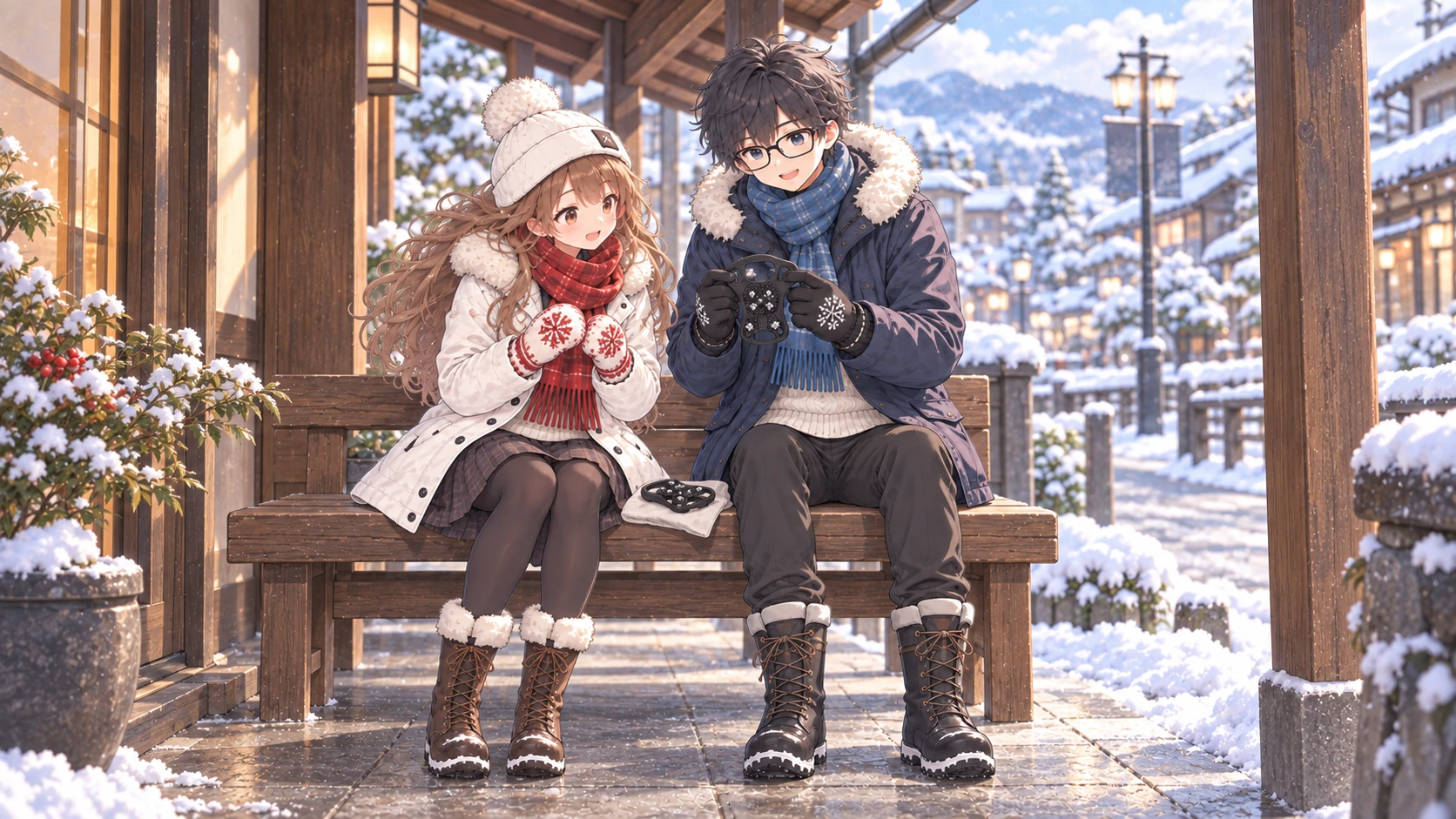
Sole-mounted ice grips are for traction. Do not rely on them to provide insulation or waterproofing; assess the shoe itself for warmth and water protection. Check compatibility with your particular shoe, how to secure the grips, and where the maker allows them to be used. “Fits this shoe size” alone is not enough if their shape does not fit the sole.
Before entering a building, check your device’s indoor-use restrictions and follow its instructions. Practice fitting and removing the grips before your trip.
Arrange footwear before you need it
If you need a new pair, allow time to try it on and walk in it before departure. The Sapporo Winter Road Guide also identifies local shoe shops as places to ask about winter footwear. Availability, sizes, and prices are not guaranteed, so buying after arrival needs a plan for reaching the shop without relying on an icy walk in unsuitable shoes.
Useful questions to show shop staff:
- 雪や氷の上を歩くための靴を探しています。
Yuki ya kōri no ue o aruku tame no kutsu o sagashite imasu.
I’m looking for shoes for walking on snow and ice. - この靴の防水仕様を教えてください。
Kono kutsu no bōsui shiyō o oshiete kudasai.
Could you explain this shoe’s waterproof specifications? - この靴底は、どんな路面で使うことを想定していますか?
Kono kutsuzoko wa, donna romen de tsukau koto o sōtei shite imasu ka?
What surfaces is this sole designed for?
Show the staff your destination, activity, and the socks you plan to wear. For entrances, see Taking shoes off in Japan for genkan and slippers.
Good footwear still needs careful walking
Sapporo’s winter-road guidance recommends slow, short steps and contact with the whole sole. Do not rush. Keep your hands available for balance rather than in your pockets or occupied with bags. Fresh snow can hide ice, and a surface that looks dry may have a thin icy layer.
Take extra care when going inside: the same guide notes that snow and ice caught in shoe treads can make smooth tiled floors difficult to walk on. Clear the soles appropriately, check any grip-removal instructions, and watch changes in level at entrances.
If a route looks difficult, choose another route or ask your accommodation about an alternative.
Frequently asked questions
Do I need to take two pairs of shoes?
One pair may be enough if it is suitable for both city walking and the snowy part of your route. Consider another pair when one cannot cover both comfortably.
Are winter sightseeing boots the same as ski boots?
Do not assume they are interchangeable. Skiing and snowboarding use specialized equipment. Ask your resort what its rental includes and what footwear you need when you are not on the slopes.
How can I check conditions shortly before departure?
Use the Japan Meteorological Agency’s forecast for each destination, then read current local visitor and activity guidance. A forecast helps with planning but does not describe the condition of every pavement.
Official sources and review date
Information reviewed on 3 October 2026. This guide combines official guidance with an editorial planning checklist. It does not report personal boot tests or compare specific products. Weather, services, product specifications, and stock can change.
Source note — product-specific example: Tingley says its Winter-Tuff studded overshoes are not recommended indoors and may scratch floors. This restriction applies to that product; check the instructions for your own device.
- JNTO: Winter in Japan — regional differences
- JNTO: Japan in February — occasional city snow
- Welcome to Sapporo: What to wear in winter — local footwear advice
- Sapporo Winter Road Guide — English PDF hosted by the Hokkaido Regional Development Bureau; footwear, walking, and indoor-floor cautions
- Ministry of Health, Labour and Welfare: Winter fall prevention — Japanese workplace guidance
- MoonStar: Water-repellent finish and waterproof-design examples — Japanese manufacturer explanations: Water-repellent finish / Waterproof-design examples
- Mitsuuma: Winter-shoe guidance — Japanese manufacturer advice; see the winter-shoe section on the page
- New Balance: Fitting guidance — Japanese manufacturer advice on checking both feet and using suitable socks
- Tingley: Winter-Tuff studded overshoes — restrictions for that product
- JNTO: Beginners’ guide to skiing and snowboarding — specialized gear and rental checks
- Japan Meteorological Agency: Weather forecast
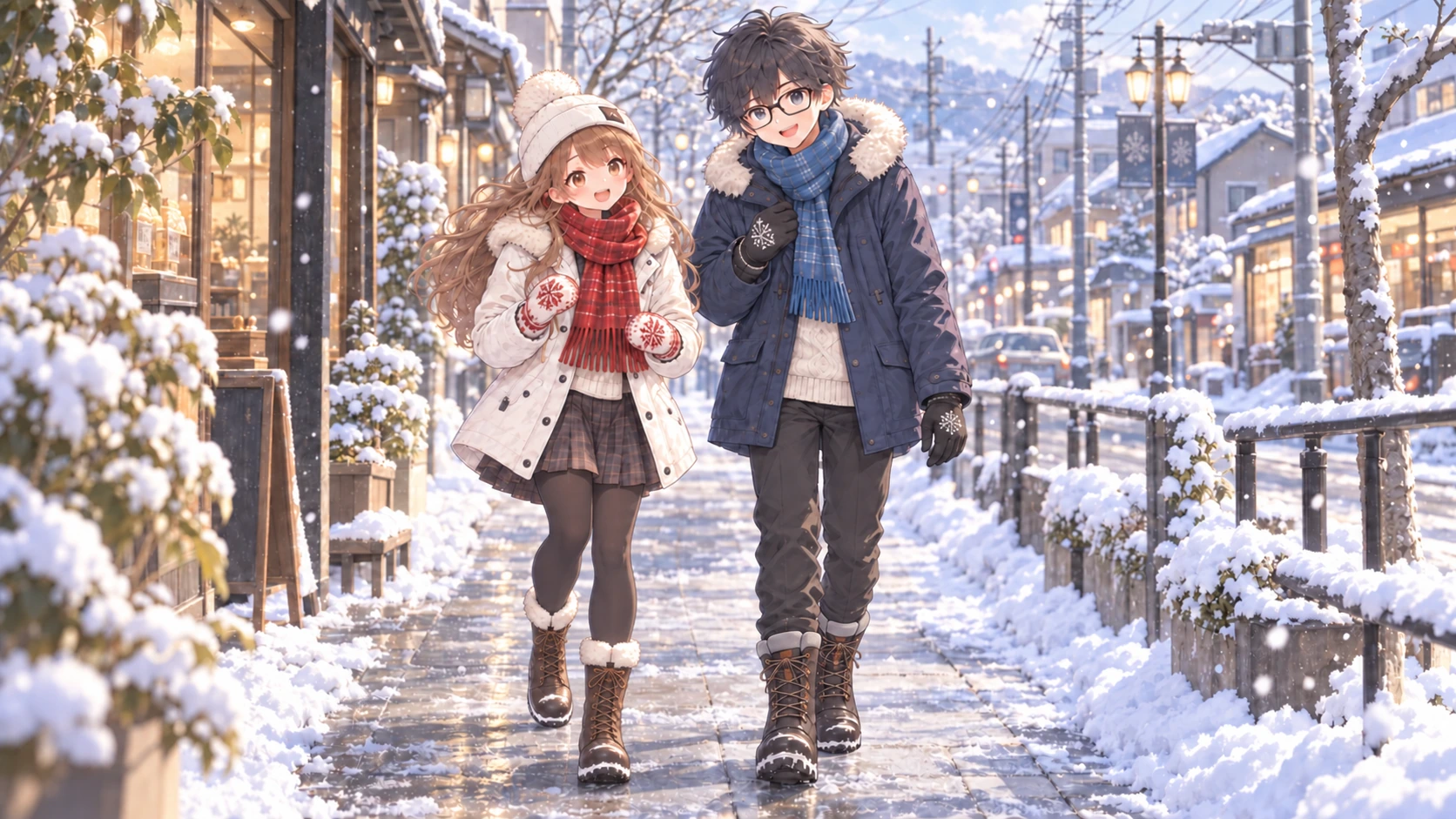
Featured image: AI-generated illustration of Sora and Yuki walking along a snowy Japanese street. The characters are fictional illustrated guides. The scene is illustrative and does not depict a tested product.
コメント