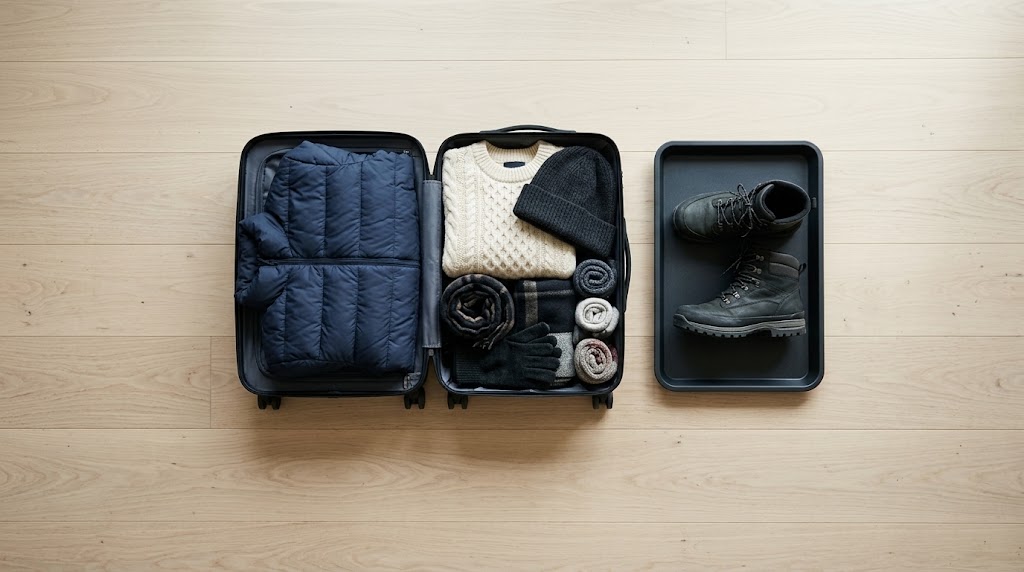
For a winter trip to Japan, start with a warm winter jacket, then plan the rest around your route, time outdoors, and booked activities. Winter conditions differ by region: the Japan National Tourism Organization (JNTO) says snow is rare in many metropolitan areas but regular in northern and mountainous areas. Check the forecast for each stop, not just your arrival city.
This guide focuses on winter clothing and activity gear. Use a separate general travel checklist for essentials such as travel documents, medication, and electronics.
Quick answer: Pack a warm jacket and clothes you can combine. Choose footwear and accessories for the places and activities on your itinerary. If you plan to ski or snowboard, check the resort’s current rental and clothing information before packing specialized gear.
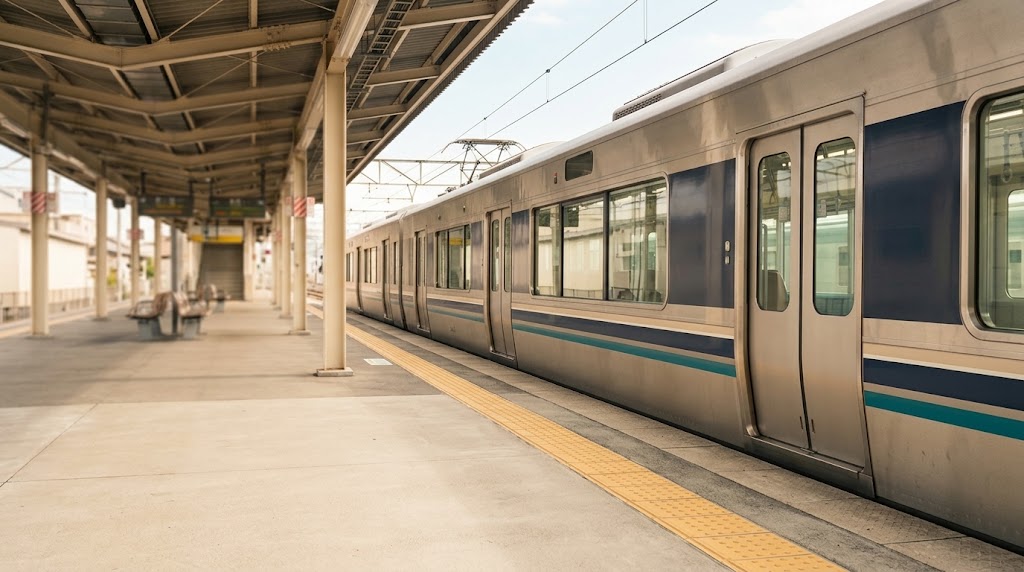
The featured image and character illustrations are AI-generated. The featured image shows an illustrative packing arrangement.
Start with your route, then check the weather
A winter itinerary can include very different conditions. Write down every overnight stop and outdoor day trip, then note the longest stretch you expect to spend outside. A city sightseeing day, a snowy village visit, and a ski day do not call for exactly the same bag.
JNTO recommends a warm winter jacket regardless of destination, while also noting that winter severity varies by location. Use the Japan Meteorological Agency’s weather forecast to check conditions for your destinations close to departure. Forecasts change, so this is a planning check rather than a guarantee of the weather you will encounter.
Will I need to wear all my warm layers indoors, too?
Indoor temperatures may feel warmer than outside. Keep a removable layer easy to reach so you can adjust as you move between outdoors and heated spaces.
Use this trip-by-trip checklist
| Your plans | What to pack or check |
|---|---|
| Mostly city sightseeing | A warm jacket, layers you can add or remove, and comfortable shoes suited to your walking plans and the forecast. |
| Snowy town, mountain, or outdoor visit | Check local conditions and any destination guidance. Decide whether your footwear and outer layers suit the expected snow, wetness, wind, and time outdoors; consider spare socks and weather-appropriate gloves or a hat. |
| Skiing, snowboarding, or another organized snow activity | Follow the resort or activity operator’s clothing and equipment list. Check what can be rented, what is included, and whether you need to reserve items before arrival. |
This table is a planning aid, not an official equipment standard. Conditions, personal comfort, and activity requirements vary. Do not treat an everyday travel checklist as technical safety guidance for outdoor sports.
Three sample packing plans
These are starting examples, not official requirements. The first two assume you are not doing laundry during the trip; adjust them for your body, forecast, luggage space, and actual schedule.
Three nights in a city, with no laundry
For four calendar days, one possible starting set is: wear one top, one pair of trousers, a warm jacket, and comfortable walking shoes; pack three more tops, one more pair of trousers, four underwear sets, four pairs of socks, and one or two light mid-layers. Add gloves or a scarf if the forecast and your comfort call for them. This is an example to scale up or down, not a rule for every traveler.
Four nights in a city, plus one snowy outdoor day
For a five-day trip with no laundry, a starting point could be five underwear sets, five to six pairs of socks with a dry pair kept accessible, four extra tops beyond the one you wear, and two pairs of trousers in total. Add a warm mid-layer and gloves for the outdoor day. Adjust for your layering choices, personal needs, and laundry access. Check whether the route is expected to be snowy, wet, or icy and follow local guidance on footwear. For Sapporo, the Winter Road Guide recommends shoes made for winter roads or attachable anti-slip devices. Japan’s Ministry of Health, Labour and Welfare, in its Japanese workplace-safety guidance, cautions that many shoes marketed as slip-resistant are designed for wet or oily floors and may still slip on snow or ice. Treat these as examples, not a nationwide footwear rule, and check guidance for your destination.
One ski or snowboard day
Plan a base layer, a warm layer, and the warm waterproof outer clothing required by your resort or lesson provider. Before packing or renting, ask exactly what the rental includes, such as outerwear and equipment, and whether you need to reserve sizes. Follow the provider’s current checklist for any other required items; do not treat this sample as a technical safety list.
Pack a small, flexible core
Use the list below as a starting point, then adjust quantities for your trip length and laundry access. It is an editorial checklist, not a JNTO packing list or a set of items every traveler must buy.
- One warm winter jacket: JNTO recommends bringing one for winter travel throughout Japan. Choose it for your own comfort and the conditions you expect.
- Combinable clothing: Bring a few tops and mid-layers that work together, rather than packing several bulky pieces for the same purpose.
- Everyday clothes and sleepwear: Choose amounts based on your itinerary, trip length, and whether you can wash and dry clothes.
- Socks and suitable footwear: Consider how much you will walk and whether your route includes snow or wet ground. For snow or ice, check local footwear guidance; no general packing list can guarantee traction.
- Weather-dependent accessories: Gloves, a hat, or a scarf may be useful depending on the forecast, your planned time outside, and personal comfort.
- A day bag: Leave room for a layer you take off during the day and small items you want accessible.
Treat snow sports as a separate packing decision
Skiing and snowboarding need more than an ordinary sightseeing list. JNTO notes that these activities call for warm, waterproof clothing and specialized equipment. It also says rental shops are available at almost every ski area, but the clothing and gear available differ by resort. Check the resort’s own information before deciding what to bring or rent.
Does renting skis or a snowboard automatically include everything I need?
Not necessarily. Check whether your resort rents clothing as well as equipment, what each rental includes, and whether you need to reserve sizes in advance.
For a first ski or snowboard experience, JNTO recommends taking a lesson. Check lesson availability and the resort’s current clothing and equipment details before you book. For snowshoeing, guided hikes, or other winter activities, follow that operator’s own equipment guidance.
Make a final check before you leave
- Check the forecast for each destination and outdoor day trip.
- Read the current clothing and equipment information for booked activities.
- Confirm whether your accommodation has laundry and drying facilities; do not assume a washer means clothes will be dry by a particular time.
- Try your shoes with the clothes you plan to wear, and make sure you can walk comfortably in them.
- Keep the jacket, footwear, and first-day essentials easy to reach in your luggage.
- Remove duplicate items that do not match a specific part of your itinerary.
Frequently asked questions
How many everyday outfits should I pack?
There is no fixed number that suits every trip. Plan outfits you can combine, then adjust for your trip length, laundry access, and how much space you want to carry.
Do I need ski clothing if I am not skiing?
Not just because it is winter. Match your clothing to the forecast, time outdoors, and any activity instructions.
Can I rent snow-sport equipment in Japan?
Many ski areas have rental shops, but available items differ by resort. Confirm current options directly with your resort.
A simple way to pack
Bring a warm jacket, build a compact set of clothes you can combine, and make decisions about footwear and accessories from your route and forecast. Add sport-specific equipment only after checking the activity provider’s requirements and rental options. That keeps the list useful without treating every winter trip to Japan as a snow trip.
Information checked against JNTO and Japan Meteorological Agency guidance on September 23, 2026. Forecasts and resort services can change; check the linked official pages and your specific provider before departure.
Sources and further guidance
- Japan National Tourism Organization: Winter in Japan — regional winter variation and general winter travel guidance.
- Japan National Tourism Organization: Beginners’ guide to skiing and snowboarding — clothing, specialized gear, lessons, and resort rental variation.
- Japan Meteorological Agency: Weather Forecast — check current forecasts for destinations in Japan.
- Sapporo Winter Road Guide — local winter footwear and walking guidance for icy roads in Sapporo.
- Japan Ministry of Health, Labour and Welfare: Winter fall-prevention guidance — Japanese workplace-safety guidance on why wet-floor slip-resistant footwear may still slip on snow or ice.
コメント