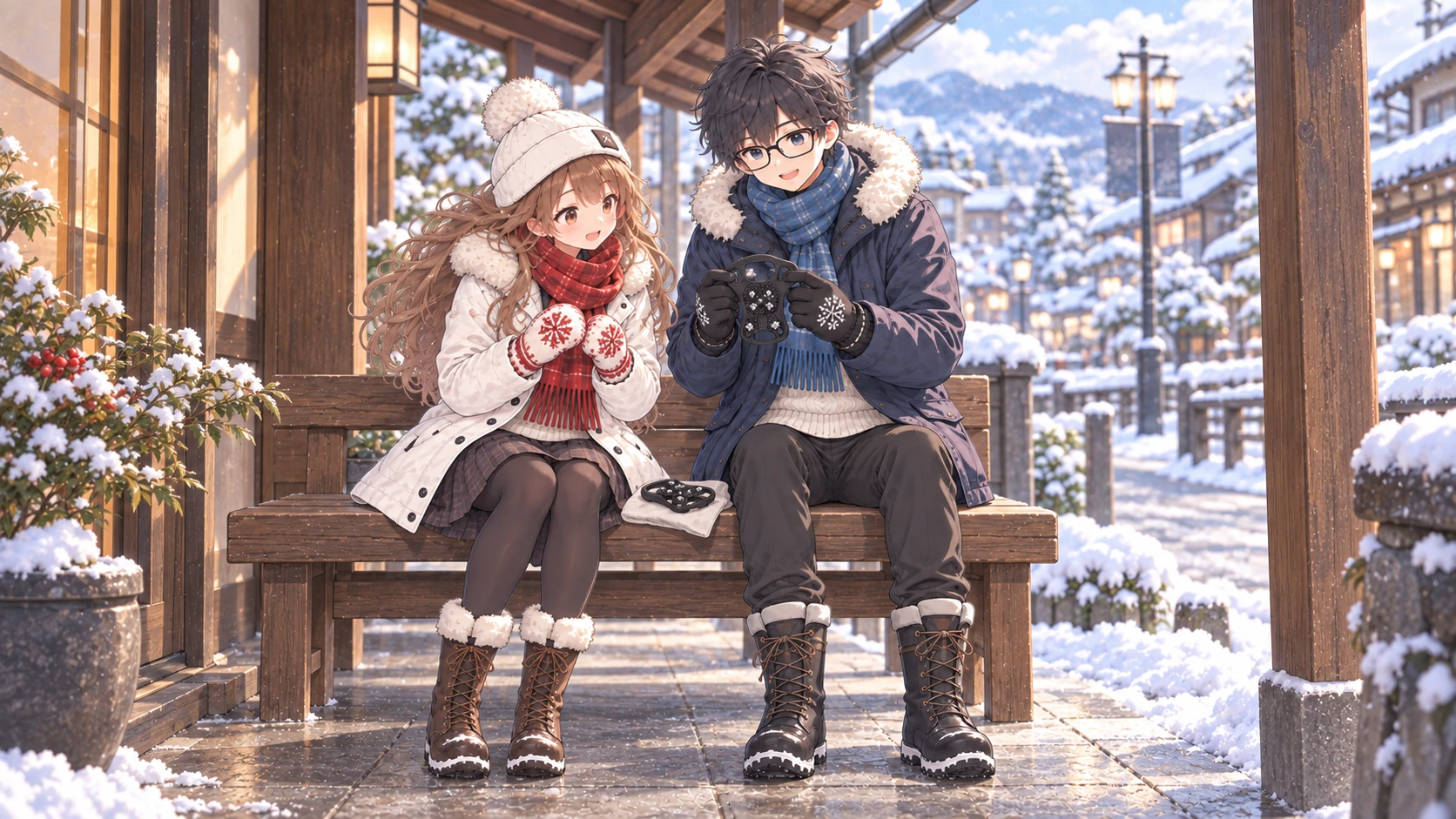
For a Japan trip that includes icy streets, removable ice grips may be a useful addition to suitable footwear. Before buying, check the exact model’s intended activity, its fit on your actual shoes, and the surfaces where you must remove it. A shoe-size label alone does not answer those questions.
This guide focuses on ordinary winter sightseeing. If you are still deciding what shoes to pack, start with Do you need snow boots in Japan?.
Decide whether your route calls for extra traction
Ice grips are removable devices fitted around or under a shoe to add traction. You may also see “ice cleats,” “snow spikes,” or the Japanese word 滑り止め (suberidome, anti-slip aid). These names cover different designs and uses; do not treat them as interchangeable specifications.
Sapporo’s official visitor guidance identifies attachable anti-slip spikes as an option for extra grip on winter roads. That is local context, not a requirement for every winter trip in Japan.
| Your plan | First check |
|---|---|
| Dry, snow-free city sightseeing | Do not buy traction devices only because it is winter. Recheck conditions for every destination and day trip. |
| Walking on snowy or icy streets | Check footwear for winter conditions, then consider a compatible device intended for your activity and surfaces. |
| A guided snow activity or mountain route | Get the provider’s equipment requirements. A city-walking device is not a substitute for the required gear. |
Sole-mounted grips address traction. Assess the shoe separately for warmth, water protection, and comfort. You can use our Japan winter packing list to plan the rest of your clothing.
Read the intended use before comparing designs
Start with the model’s current instructions. Find the intended activity, permitted surfaces, and exclusions before comparing weight or appearance.
Two examples show why this matters:
- Kahtoola NANOspikes’ manual (PDF) describes added traction for pedestrian use on ice, snow, and frozen ground. It excludes mountaineering, limits use to outdoors, and warns that the device can damage indoor floors and cannot prevent every slip or fall.
- Montbell Chain Spike #1129740’s manual (PDF) limits the product to trekking and hiking and excludes alpine conditions. It is not an ordinary city-sightseeing choice under that manual.
Studs, coils, and chains describe construction; the model’s instructions tell you what that construction is intended to do.

The package says “snow spikes.” Does that mean I can use them for both shopping and a mountain outing?
Look for the exact activity in the manual. A shared name does not make two devices suitable for the same trip.
Check the fit on the shoes you will bring
Take your actual travel shoes to the shop where possible. If buying online, read the current model’s sizing guidance and check the seller’s return conditions before ordering.
Use this fit checklist with the product’s fitting instructions:
- Correct size guide. Check the exact model and whether the chart uses centimetres, EU sizes, or another system. Do not transfer one brand’s size adjustment to another.
- Shoe shape. Tell the seller whether you use low walking shoes or bulky insulated boots. Montbell’s manual notes that some shoe shapes will not fit its Chain Spike even within the stated size range.
- Correct orientation and fastening. Follow the diagrams for that device. Confirm the required position of the traction parts and any straps; do not invent a fastening method.
- A secure fit. Ask how to recognise a correctly fitted device. If it twists, comes off, or changes position, stop and resolve the fit according to the instructions rather than continuing.
- Practical removal. Try the fitting and removal process before the trip, somewhere suitable under the manufacturer’s guidance. Think about your gloves, luggage, and repeated stops.
Ask for help if you cannot understand the fitting instructions. A product that you cannot fit and remove properly is a poor choice for your travel day, even if it packs neatly.
Plan for shops, entrances, and cleared pavements
A sightseeing day can move between snow, bare pavement, and indoor floors. Check these transitions before buying; do not assume an outdoor device can stay on all day.
For example, Yaktrax’s US FAQ says its devices are not for indoor use. Its coil-device guidance excludes gravel, concrete, and sanded roads cleared of snow. The NANOspikes manual also specifies outdoor use only. These restrictions concern the cited products and guidance; check the instructions for the model you choose.
Before setting out, answer three practical questions:
- Where does my model need to come off, including inside buildings, on cleared surfaces, or around transport?
- Where can I stop to change it without blocking an entrance or balancing on an icy patch? Ask your accommodation about a suitable place if needed.
- How will I carry it after removal? Check the maker’s storage instructions and arrange a suitable pouch so it does not sit loose among your belongings.
Allow time for these changes. Follow venue rules as well as the device’s instructions. For shoes-off entrances, see Taking shoes off in Japan.
My day includes several cafés. What should I check besides the grip?
Check the removal rules and whether you can manage the changes comfortably with your shoes and bag. That is part of choosing the device.
Prepare your grips and check them during use
Buy and prepare
Arrange your footwear and any compatible grips before the first icy part of your route. Sapporo’s visitor guidance mentions local shops as a source, but it does not guarantee today’s stock, your size, or a particular model. If buying after arrival, plan how to reach the shop before relying on a snowy walk in unsuitable footwear.
Useful questions to show shop staff:
この靴に合う滑り止めはありますか?
Kono kutsu ni au suberidome wa arimasu ka?
Do you have removable ice grips that fit these shoes?
どんな路面で使えますか?
Donna romen de tsukaemasu ka?
What surfaces can I use them on?
屋内では取り外す必要がありますか?
Okunai de wa torihazusu hitsuyō ga arimasu ka?
Do I need to remove them indoors?
Save the exact model’s instructions before departure.
Check before and during use
Check the device’s condition as those instructions require, including after changes during the day. The NANOspikes manual lists damaged or missing spikes, cracked material, and damaged rivets among its inspection points. Do not treat damaged equipment as ready to use; follow the maker’s stop-use and replacement guidance.
Traction devices do not remove the need to choose your route and walk carefully. Sapporo City’s current winter-fall guidance advises small steps, whole-sole contact on icy surfaces, and allowing enough time. Avoid dragging your feet completely along the ground, which can cause a trip. If a route looks difficult, ask about an alternative.
Frequently asked questions
Can I use the same pair on trainers and winter boots?
Do not assume so. Check both pairs with the exact model’s guide and fitting method. Keep the shoe you will actually use as the basis for the purchase; a matching printed size is not proof of a matching shape.
Are more or longer spikes always better for sightseeing?
No single feature settles the choice. Start with permitted activity and surfaces, then fit and removal.
Can I buy them at any convenience store in Japan?
Do not plan on nationwide availability. Sapporo’s local guidance mentions shops selling attachable spikes, but check the store, current stock, size, and intended use yourself. The example manufacturer links below are sources for specifications, not promises of delivery to Japan.
Official sources and review date
Information reviewed on 3 October 2026. This article combines official product restrictions and local winter guidance with an editorial buying checklist. The named products are examples of use restrictions. This guide does not report personal product tests, rank or recommend products, or compare grip strength. Specifications, instructions, stock, and seller policies can change; recheck the exact model before buying and using it.
- Welcome to Sapporo: Winter footwear and walking tips — local context and attachable-grip availability, not a nationwide stock guarantee.
- Kahtoola: NANOspikes manual (PDF) — English sections 1, 3, and 6 cover intended use, inspection, and retirement. Check the current product page and size guide for the model you are considering.
- Montbell: Chain Spike #1129740 manual (PDF) — Japanese pages 2–4 and English pages 6–8 cover restrictions, fitting, and shoe-shape limits. Used to explain the activity distinction.
- Yaktrax US: Frequently asked questions — see the coil-care and proper-use sections for surface and indoor restrictions. The Walk product page has model information and sizing.
- Sapporo City: Winter-road fall prevention — Japanese public guidance; see 転倒事故の予防 (fall prevention).

コメント