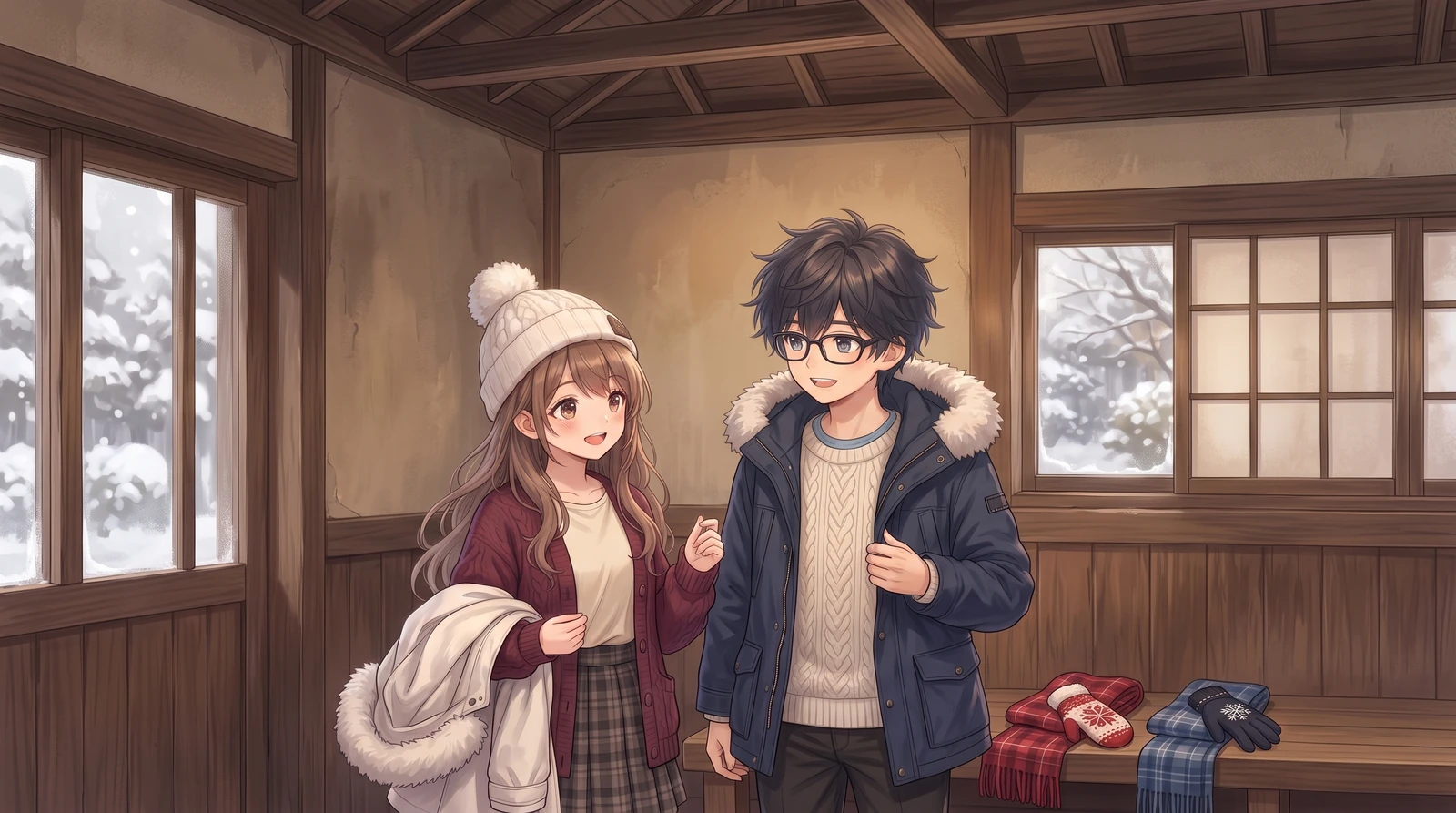
Quick answer: Wear clothes that let you add or remove warmth as your day changes. A comfortable next-to-skin layer, a removable warm layer and a coat suited to the weather are a useful starting point. These are three jobs, not a rule that you must wear exactly three garments. An insulated winter coat can provide both warmth and protection from wind.
A coat that feels right outside may feel too warm in a heated café. A comfortable walking outfit may be insufficient when you stop outdoors for a long time. Layering helps you adjust without changing your whole outfit.
This guide is for ordinary sightseeing: city walks, museums, cafés and snowy towns. Skiing and winter mountain trips need activity-specific clothing and advice. For a full packing checklist, start with our Japan winter packing list.
- Plan for your day, not just the word “winter”
- Give each layer a job
- Adjust before you become uncomfortably hot
- Two outfit examples to adapt
- Think about your legs and accessories too
- Check these things before buying more clothes
- Useful Japanese when shopping
- Common questions
- Before you leave the hotel
- Sources and scope
Plan for your day, not just the word “winter”
Check the Japan Meteorological Agency’s English forecast for each destination before you choose your clothes. Select your region under “Area.” Japan’s winter conditions vary by region. Your route, wind, rain or snow, and time outdoors matter as well as the temperature.
Ask yourself:
- Will I mostly move between shops, museums and cafés, or spend a long time outside?
- Will I walk steadily, or stand around at an outdoor event or bus stop?
- Where will I put my coat or extra layer when I take it off?
In Sapporo, the official tourism guide recommends clothes that are easy to add and remove because buildings are heated. Plan for indoor stops as well as outdoor weather. Source: Sapporo Travel.
Give each layer a job
Montbell describes layering in terms of moisture management, insulation and protection from the weather. The simple travel version below applies those roles to everyday clothes. Source: Montbell.
| Layer | What to look for when sightseeing |
|---|---|
| Base: next to your skin | A T-shirt, long-sleeved top or thermal underwear. For active walking, moisture-wicking, quick-drying fabric can help manage sweat. Choose thickness for your day. |
| Middle: warmth | A sweater, cardigan or fleece you can remove. A zip or buttons can make adjustments easier than a tight pullover. |
| Outer: weather protection | A coat suited to the expected wind, rain or snow. An insulated coat also adds warmth; a thin waterproof shell may provide little insulation. |
Start with clothes you already own. Check what your chosen combination is missing before buying more.
Leave enough room in your coat to move comfortably with your layers underneath. A combination that restricts your shoulders or will not zip up is not a useful travel outfit.
Adjust before you become uncomfortably hot
Arc’teryx’s layering guide explains adjusting clothing when you feel too hot or cold. Here is how we apply that principle to a sightseeing day. Source: Arc’teryx.
While walking: If you feel too warm, open your coat or reduce insulation where conditions allow. Keep necessary wind, rain or snow protection. The aim is to avoid excessive sweating, not to make yourself cold.
In a heated indoor space: Open or remove your coat, then the middle layer if needed. If your clothes become damp with sweat, change into dry clothes when practical before another long outdoor stop.
Before a longer outdoor stop: Add warmth as needed before waiting at a bus stop or watching an event. If you still feel cold, take an indoor break. Recheck the forecast for evening plans.
If I take off my cardigan indoors, will it fit in my day bag with everything else?
Try packing the removed layer with your usual day-bag items before the trip. It is easier to change the plan at home.
Two outfit examples to adapt
These are starting points, not outfits guaranteed to suit a particular temperature. Adjust them for the forecast, how long you will be outside and your own comfort.
A city day with museums and café stops
Start with a comfortable long-sleeved top, a removable cardigan or fleece, a coat appropriate for the forecast, trousers and comfortable walking shoes. Add a scarf or gloves if needed. If a thick thermal layer leaves you too hot indoors, a lighter base layer may be easier to live with.
A snowy town with longer outdoor waits
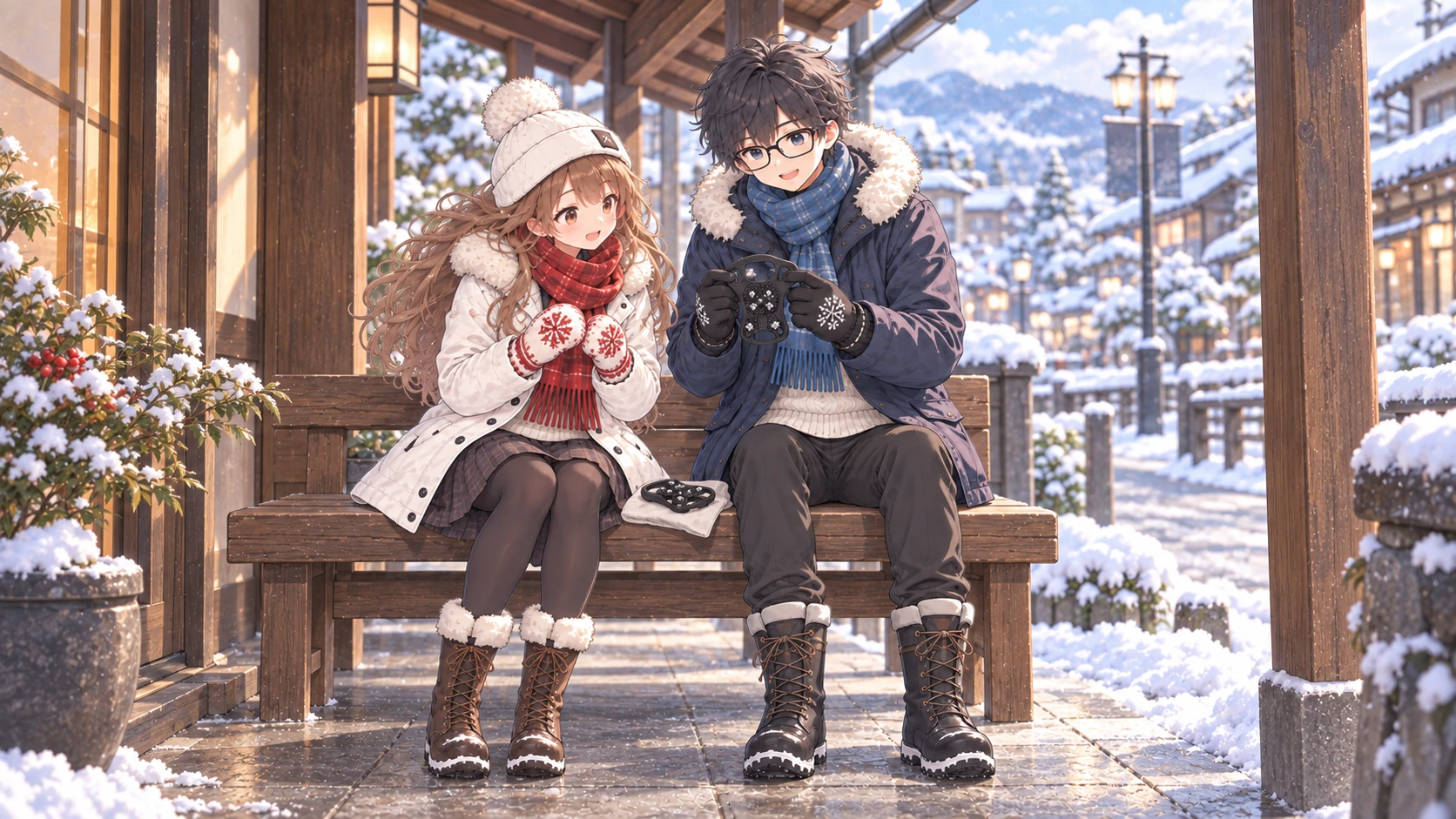
Consider warmer base and middle layers, an insulated coat suited to the conditions, warm legwear, a hat, gloves and a scarf. Check footwear separately: clothing layers do not solve slippery or wet ground. Our snow-boots guide explains what to check for ordinary winter sightseeing.
What if I stay out after dinner? Would my daytime outfit be enough for a longer evening event?
If you can return to the hotel before the evening event, use that stop to adjust your outfit. For example, you could add a warmer middle layer rather than wear it through a day spent mostly indoors.
Think about your legs and accessories too
Thermal leggings under trousers can add warmth, but you cannot remove them as conveniently as a cardigan while sightseeing. Before packing, try the clothes you would keep on indoors, after removing your coat and removable warm layer. Check whether the leggings still feel comfortable. If they feel excessive for a mostly indoor day, consider a lighter option.
A hat, scarf and gloves are easier to put on or take off. Keep them somewhere accessible in your bag. They let you make smaller adjustments without unpacking everything.
Check these things before buying more clothes
- Fit together: Try the whole combination and check that you can raise your arms, sit and fasten your coat comfortably.
- Removal and storage: Can you take off your cardigan or fleece easily, and will it fit in your day bag with your other belongings? Plan separately for carrying a bulky coat.
- Care and drying: Check the washing instructions. Do not assume your hotel has a dryer or that every garment can go in one.
- Weather claims: Water-repellent fabric sheds water at its surface; waterproof fabric is designed to stop water passing through it. A water-repellent finish alone does not make a coat waterproof. If rain or wet snow is likely, check the garment’s stated protection rather than its appearance alone.
Montbell’s material guide distinguishes water repellency, waterproofing and the ability to let moisture vapour escape. Those are different properties; they are not guarantees of comfort in every situation. Source: Montbell material guide.
Useful Japanese when shopping
薄手のインナーはありますか?
Usude no innā wa arimasu ka?
Do you have a thin base layer?
洗濯機で洗えますか?
Sentakuki de araemasu ka?
Can I machine-wash this?
試着してもいいですか?
Shichaku shite mo ii desu ka?
May I try this on?
Ask staff before trying anything on; trying on underwear or base layers may be restricted. For washing and drying, follow the garment’s care label.
Common questions
Do I need thermal underwear everywhere in Japan?
No. Consider the forecast, your time outdoors and your comfort. Thermal underwear is an option, not a requirement for every winter trip.
Is a waterproof jacket enough for winter?
Waterproofing describes protection from water, not how warm the jacket is. A thin shell usually needs insulation underneath when it is cold. Check both warmth and weather protection rather than treating either one as the whole answer.
Should I buy specialist outdoor clothing for city sightseeing?
Not automatically. Start with suitable clothes you already own and check the gaps in warmth, weather protection, fit and drying. Technical sports or mountain trips are a different situation: follow the activity provider’s or local expert’s clothing requirements.
Before you leave the hotel
Check the day’s weather and your longest outdoor stop. Wear a combination you can adjust. Leave room in your day bag for removable warm layers and accessories, and decide how you will carry your coat when you take it off. The best travel outfit is one you can use comfortably through your actual day, not simply the thickest outfit you can pack.
Sources and scope
- Montbell: Layering system — clothing roles and adjustment principles.
- Sapporo Travel: What to wear in winter — Sapporo-specific guidance on removable layers and heated buildings.
- Montbell: Material guide — meanings of moisture management and weather-protection terms.
- Arc’teryx: Layering clothes — adjusting clothing for warmth and comfort; sports-specific recommendations are outside this sightseeing guide’s scope.
- Japan Meteorological Agency: Climate of Japan — regional differences.
- Japan Meteorological Agency: English forecasts — check the weather for your destinations.
Source information checked on October 6, 2026. The sightseeing routines, outfit examples and packing checks are our practical applications of the guidance, not manufacturer recommendations for a particular temperature. Yuki and Sora are fictional guides; their dialogue illustrates travel situations rather than reporting product tests.
コメント