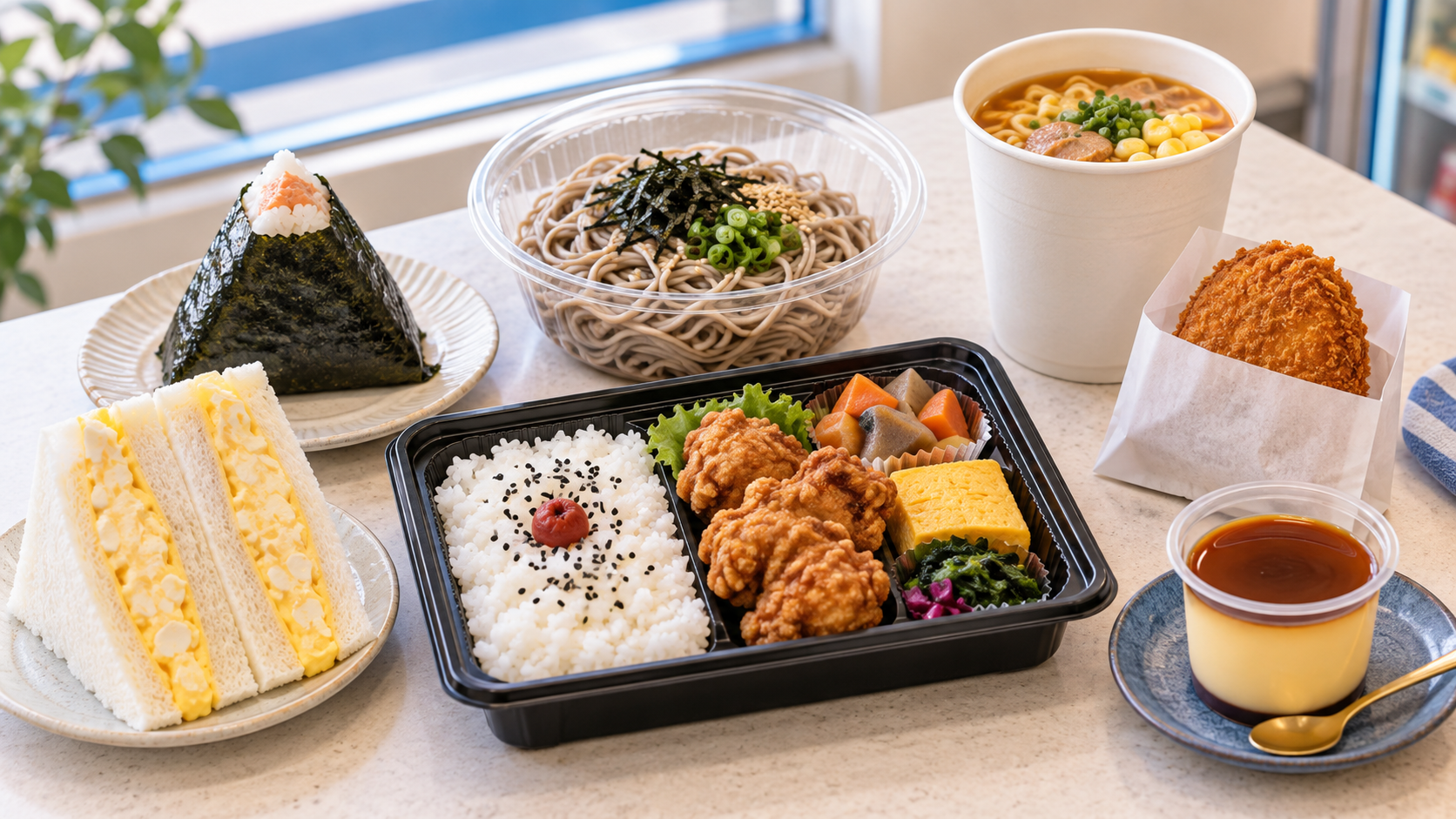
This guide is for first-time visitors who want an easy, affordable meal from a Japanese convenience store. In a few minutes, you can pick up breakfast, lunch, a light dinner, or a late-night snack. Here are seven convenience-store foods to try first, with typical prices and simple tips.
Dollar amounts are rough conversions using ¥157 = US$1. Actual prices and exchange rates vary.
1. Onigiri (rice balls)
Onigiri are rice balls filled with salmon, tuna mayonnaise, pickled plum, kelp, and other ingredients. They are easy to carry and usually cost about ¥130–¥250 (US$0.85–$1.60), depending on the store and filling. Salmon and tuna mayonnaise are approachable first choices. Follow the opening instructions on the wrapper, and see our onigiri guide for step-by-step help.

The rice is soft and filling, while the different fillings let you try several Japanese flavors.

Check the label if you have allergies, then look for the triangular wrapper with the filling name on the front.
Good for: breakfast, a light lunch, or a snack. Typical price: about ¥130–¥250 (US$0.85–$1.60).
2. Bento boxes
A bento is a boxed meal with rice, a main dish, and several side dishes. Chicken, grilled fish, and pork cutlet are common choices. Bento boxes usually cost about ¥400–¥700 (US$2.55–$4.45) and are useful when you want a complete meal without visiting a restaurant. Selection changes by chain, region, and season.
I like getting several textures and flavors in one box, especially the small side dishes.
Check the ingredients, use-by date, and heating instructions before you pay. Staff can warm suitable items when that service is available.
Good for: a filling lunch or dinner. Typical price: about ¥400–¥700 (US$2.55–$4.45).
3. Egg sandwiches and other sandwiches
Convenience-store sandwiches are usually neatly packaged and easy to eat while traveling; texture and fillings vary by product. The egg sandwich is often an approachable first choice because the filling is mild and creamy. Depending on the store, you may also find ham and cheese, chicken, or fruit sandwiches. Many cost about ¥250–¥400 (US$1.60–$2.55).
The egg filling is smooth and gentle, so it is a good choice when you want something familiar.
The sealed package makes it convenient on a train or during a walk, but check the chilled-food date before opening it.
Good for: breakfast or a no-mess lunch. Typical price: about ¥250–¥400 (US$1.60–$2.55).
4. Chilled noodles
On warm days, try chilled soba, udon, or ramen-style noodles. They usually come with a sauce packet and toppings. Add the sauce as directed and mix well before eating. Prices are often about ¥300–¥500 (US$1.90–$3.20), and the meal feels light but satisfying.
The cool noodles are refreshing when I want lunch without a heavy, hot dish.
Put the sauce in slowly and mix from the bottom so every bite has the same flavor.
Good for: summer lunches and lighter meals. Typical price: about ¥300–¥500 (US$1.90–$3.20).
5. Hot snacks from the counter
Many convenience stores sell hot snacks near the register, including fried chicken, croquettes, and steamed buns. Ask the staff if you are unsure what an item is. A hot snack often costs about ¥150–¥300 (US$0.95–$1.90) and can make a simple onigiri feel like a fuller meal.
The crisp coating and warm center are exactly what I want when I need a quick comfort food.
Availability changes by store and time of day, so point to the item or use its name when ordering.
Good for: a quick warm snack. Typical price: about ¥150–¥300 (US$0.95–$1.90).
6. Cup noodles and instant soup
Cup noodles are an easy option for a quick meal, often costing about ¥200–¥350 (US$1.25–$2.25). Some stores let you add hot water after paying, but facilities vary, so check the store. Wait for the time printed on the lid before eating. Instant miso soup and other soups also pair well with an onigiri.
The warm soup is comforting and inexpensive, especially after a long day of sightseeing.
Check whether the store has a hot-water station, and follow the package time for the best texture.
Good for: a simple meal when hot water is available. Typical price: about ¥200–¥350 (US$1.25–$2.25).
7. Japanese desserts
Finish your meal with pudding, dorayaki, a cream-filled choux pastry, or seasonal fruit jelly. Refrigerated desserts are often displayed near the drinks and chilled foods. Prices are commonly about ¥150–¥350 (US$0.95–$2.25), and limited-time flavors may change on your next visit.
A small dessert is an easy way to try a seasonal Japanese flavor without spending much.
Look in the chilled section and check the date, because new items appear there regularly.
Good for: a sweet finish or an afternoon break. Typical price: about ¥150–¥350 (US$0.95–$2.25).
How to choose a convenience-store meal
For a simple combination, pair an onigiri with a drink and a small side dish. If you are very hungry, choose a bento or combine noodles with a hot snack. Check the package for allergens, heating instructions, and the use-by date. If you need utensils, ask whether chopsticks or a spoon are available.
Frequently asked questions
What should I buy first at a Japanese convenience store?
Onigiri, an egg sandwich, or a small bento are easy first choices because the portions are clear and the food is ready to eat.
Can convenience stores heat up food?
Some stores can heat suitable items in a microwave. Ask the cashier and follow the package instructions.
Do Japanese convenience stores have vegetarian options?
Look for simple salads in the chilled-food section, but check the dressing and ingredient labels carefully because some contain egg, dairy, fish, or meat. Availability varies by chain and region. Vegetarian and vegan requirements are different, so confirm the full ingredient list if you avoid all animal-derived ingredients.
Can I eat convenience-store food on a train?
Sealed onigiri and sandwiches are usually practical, but follow local etiquette and avoid strong-smelling or messy foods on crowded trains.
Official product pages and price notes
Checked September 23, 2026. Product names, ingredients, availability, and prices can change by chain, region, store, and season. The price ranges in this article are broad guide ranges, not guaranteed shelf prices or quotations. Before you visit, check the current official product pages: 7-Eleven Japan, Lawson, and FamilyMart. These pages are useful for confirming current categories such as onigiri, bento, sandwiches, salads, noodles, hot snacks, and desserts. Always check the package label in the store, especially for allergens and vegetarian ingredients. A salad is not automatically vegetarian or vegan: dressings and toppings may contain egg, dairy, fish, or meat.
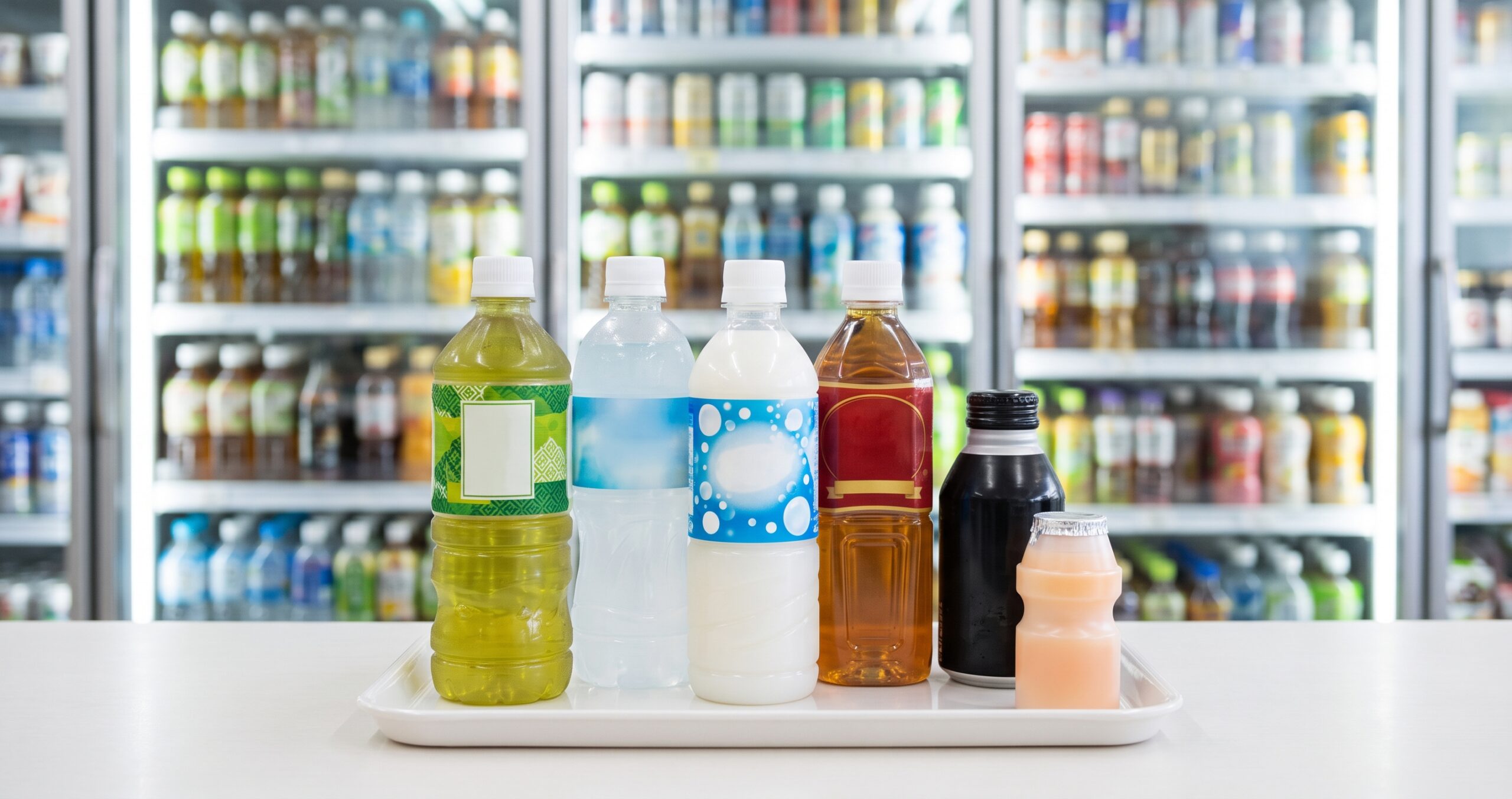
Convenience-store menus vary by chain, region, and season. For more ideas, read our guides to Japanese snacks, onigiri, and convenience-store drinks before your next visit.
コメント