Tohoku is often introduced through famous sights such as Matsushima Bay, Oirase Gorge, the temples of Hiraizumi, and Ginzan Onsen. But this region stretches across six prefectures, and some of its most memorable scenery lies beyond the usual stops.
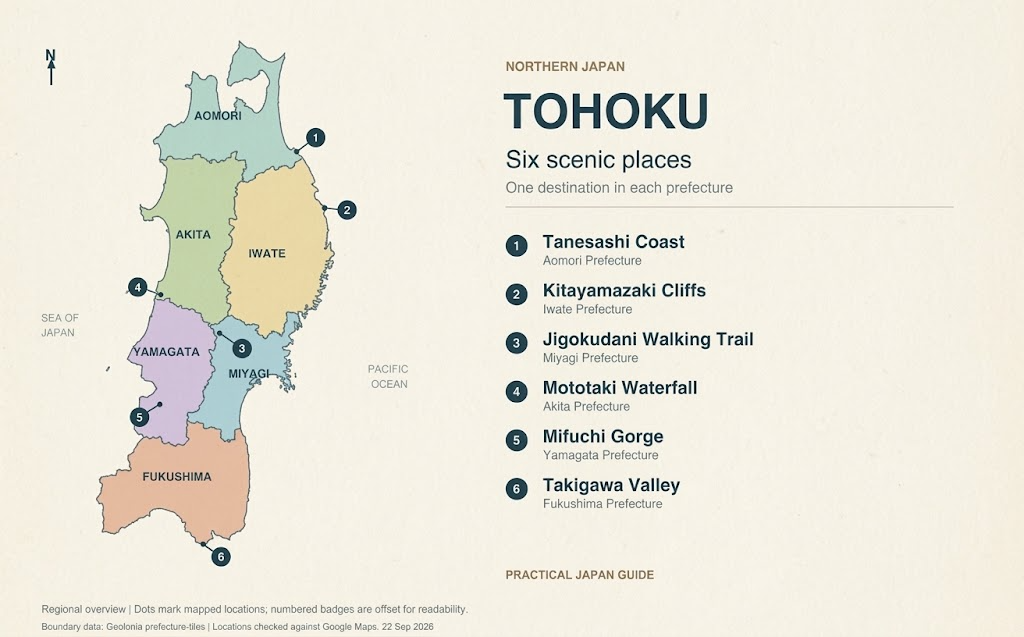
Here are six places to consider for a slower, more local-feeling trip—one each in Aomori, Iwate, Miyagi, Akita, Yamagata, and Fukushima. They are spread across a large region, so this is a collection of ideas rather than a single road trip. Check local transport, trail conditions, reservations, and seasonal access before setting out.
1. Tanesashi Coast, Aomori
At Tanesashi Coast, natural grassland reaches almost to the Pacific. The contrast between open green turf, dark pines, and the blue sea feels different from the rocky coastline many visitors expect in northern Japan. The 12-kilometer coast includes short walks and viewpoints, while more than 650 native plant species grow in the area. Flowers are especially notable from early summer into autumn.
One unusual stop is Osuga Beach, where clean, dry sand can squeak underfoot. The coastal promenade and Ashigezaki Observatory make it easy to enjoy the scenery without committing to a long hike.
Getting there: The official Tohoku tourism guide lists a sightseeing bus, a 40-minute walk from Same Station, and driving options from Hachinohe. Check the current bus timetable before you go. Official Tanesashi Coast guide.
2. Kitayamazaki Cliffs, Iwate
The Kitayamazaki coastline is a dramatic stretch of Sanriku: sea caves, unusual rock formations, and cliffs rising about 200 meters above the water. At roughly eight kilometers long, it rewards visitors who want a wide-open coastal view rather than a quick photo stop.
There are several observation platforms. The first is level with the parking area and is identified by the regional tourism office as accessible for wheelchair users and strollers. Reaching sea level is a different undertaking: 736 steps lead down from the viewpoints, so allow extra time and energy for the climb back.
Getting there: Tanohata Station on the Sanriku Railway is about 20 minutes away by shared sightseeing cab, which requires advance reservation. See the official Kitayamazaki guide.
3. Jigokudani Walking Trail, Miyagi
Near Onikobe Onsen, Jigokudani—literally “Hell Valley”—offers an unusual mix of forest walk and geothermal landscape. Steam rises from the ground, and hot spring water bubbles beside parts of the trail. In autumn, the surrounding leaves add another layer of color.
The walk from the parking area to Murasaki Jigoku takes about 30 minutes. Visitors can bring eggs to cook in the hot spring water there, and the Onikobe Geyser is within walking distance. Stay on the marked path: the local guide warns that very hot water flows beside the trail in several locations.
Getting there: The attraction is in the Onikobe area of Osaki. Confirm the trail’s current condition and access locally before traveling. See the official Jigokudani guide.
4. Mototaki Waterfall, Akita
Mototaki is less about a single tall drop and more about texture. Water emerges across a moss-covered rock face, creating a soft white veil against deep green. The spray can hang in the air like mist, giving the site a cool, sheltered feel even on a warm day.
If you have more time, local tourism information says Naso no Shirataki is about a 30-minute walk away, making it possible to see two different waterfalls in the same area.
Getting there: The waterfall is about 20 minutes by car from Kisakata Station on the JR Uetsu Main Line. See the official Mototaki guide.
5. Mifuchi Gorge, Yamagata
For a view that takes some effort to reach, head to Mifuchi Gorge in Nagai. A canoe route leads into a narrow, V-shaped valley, with high cliffs rising above the water. The regional tourism guide describes about an hour of paddling each way and a dramatic cliff more than 50 meters high.
This is an organized outdoor experience rather than a casual roadside viewpoint. Reservations are required, and the operator should be contacted in advance to confirm tour dates, weather conditions, equipment, and participation requirements.
Getting there: The launch area is in Nagai City. The official listing gives a 15-minute drive from Nagai Station and a 30-minute drive from Akayu Station. Check the official Mifuchi Gorge canoe listing before making plans.
6. Takigawa Valley Trail, Fukushima
Takigawa Valley is a secluded walking route in Fukushima’s Abukuma area. Along the three-kilometer path, a series of 48 waterfalls flows through old trees and striking rock formations. Spring brings blossoms and lilies, summer brings fresh green foliage, and the valley turns red and gold in autumn.
This is a nature walk, not a paved sightseeing promenade. Wear shoes with good grip, allow time to walk at a comfortable pace, and leave pets at home: the local tourism guide asks visitors not to bring them into the valley.
Getting there: The trail is about 10 minutes by car from Higashidate Station on the JR Suigun Line. See the official Takigawa Valley guide.
Planning a Tohoku trip
These six places are not close together, and several need a car, a pre-booked local transfer, or a reservation. Choose one or two that fit your base and travel dates instead of trying to connect all six in a short visit. Before leaving, check official local sources for transport timetables, trail or road closures, weather, and tour operation.
Tohoku’s well-known sights are worth seeing, but the region becomes even more rewarding when you leave time for a coastline, valley, or trail that was not already on your itinerary.
Travel kindly and check before you go
Weather, road closures, bus services, trail conditions, and facility hours can change. Stay on paths and boardwalks, keep out of private or protected areas, and do not stop where your vehicle blocks a narrow road. “Less familiar” depends on the traveler; these are not undiscovered locations or guaranteed crowd-free spots.

コメント