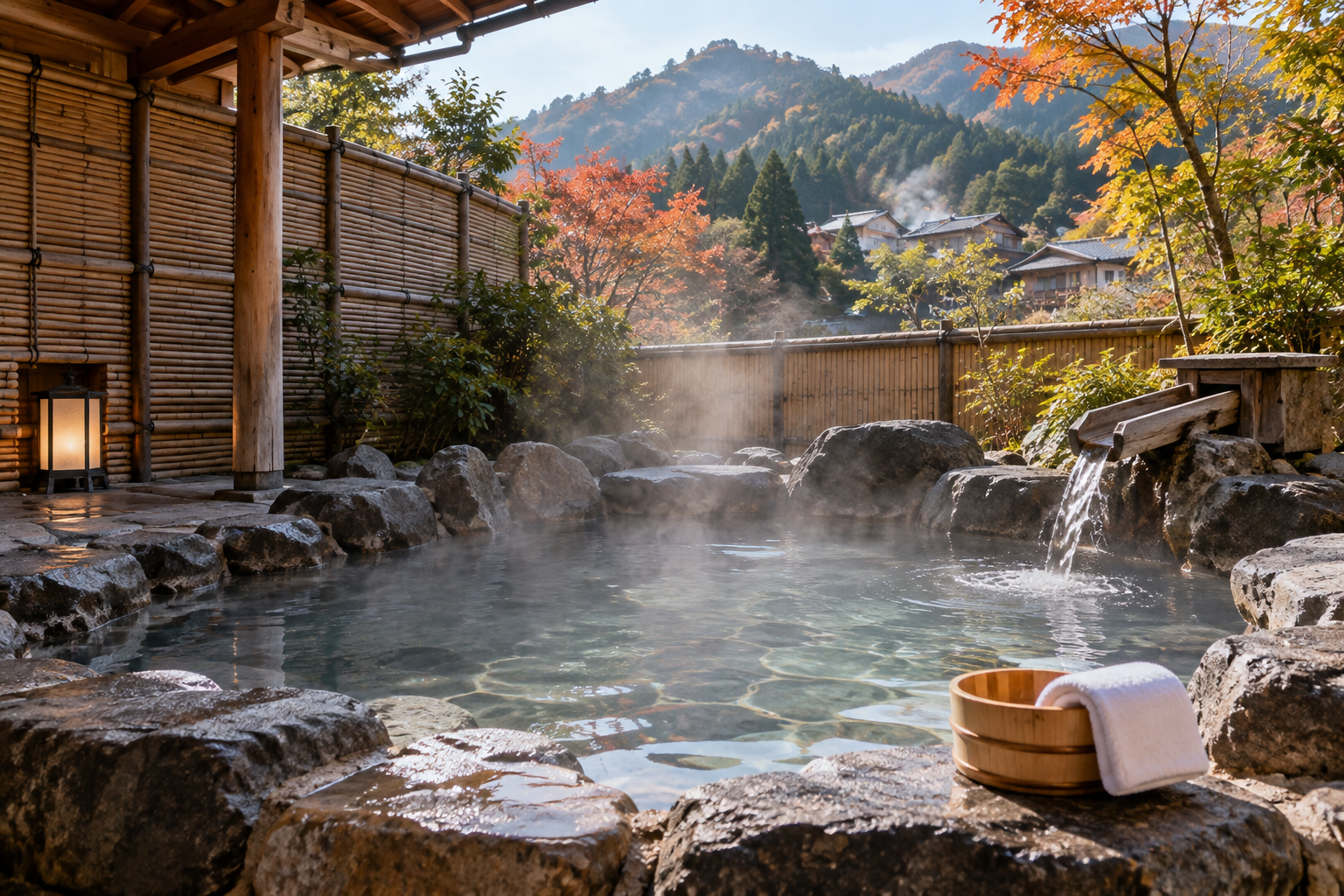
Visiting an onsen or a sento is one of the simplest ways to experience everyday Japanese culture. The first visit can feel unfamiliar because bathing is usually communal and the routine is different from using a private bathroom. Once you know the order, the experience is calm and easy to enjoy.
This guide explains the difference between an onsen and a sento, what to do from arrival to departure, and the details that help you feel comfortable. Rules vary by facility, so always check the official website or ask staff when a local rule is unclear.
Start here: On your first visit, choose a facility with clear information, check its tattoo and locker rules, and allow enough time to wash, bathe, and dry off without rushing.
- The five rules to remember
- Onsen and sento: what is the difference?
- Before you go: check the facility
- Step 1: enter the changing room and use a locker
- Step 2: wash thoroughly before entering the bath
- Step 3: enjoy the bath quietly
- Step 4: dry off before returning to the changing room
- Useful tips for a first visit
- Useful Japanese words at the entrance
- Frequently asked questions
- A calm way to experience everyday Japan
The five rules to remember
- Wash your body and rinse away all soap before entering.
- Most shared baths are enjoyed without swimwear or clothing.
- Keep towels and hair out of the shared water.
- Speak softly, avoid swimming, and give others space.
- Check the facility’s tattoo, towel, photography, mixed-gender bathing, and locker rules first.
Information checked against Japan National Tourism Organization and Japan Ministry of the Environment guidance on September 23, 2026. Facility rules, opening hours, prices, and tattoo policies can change.
Onsen and sento: what is the difference?
An onsen is a hot spring that meets Japan’s legal definition under the Hot Springs Act. In simple terms, it is groundwater, water vapor, or gas from underground that is at least 25°C at the source or meets one of the Act’s specified mineral-content standards. In travel guides, the word usually refers to a facility that uses recognized hot-spring water. An onsen may be part of a ryokan, hotel, resort, or a day-use bathing facility. For the legal details, see the Ministry of the Environment overview of the Hot Springs Act.
A sento is a public bathhouse for the local community. Many sento use heated tap water, although some public bathhouses also use natural hot-spring water. A neighborhood sento can be an affordable, friendly way to see a part of daily life that visitors may miss in a hotel.
Both are shared bathing spaces. The most important idea is simple: wash your body before entering the shared bath, then keep the water clean and the atmosphere peaceful for everyone.
I used to think an onsen and a sento were the same, but the water source is the main difference.
The etiquette is similar in both places, so learning the routine once makes your next visit much easier.
Before you go: check the facility
Look at the facility’s official website before you leave. Check the opening hours, entrance fee, whether towels and toiletries are provided, and whether reservations are needed. Some popular baths have separate rules for day visitors, private rooms, or busy periods.
If you have a tattoo, check the policy carefully. Some facilities welcome tattoos, some ask guests to cover small tattoos, and others still refuse entry to visible tattoos. Tattoo-friendly facilities and private baths are available, but policies differ by location and size of tattoo.
Most traditional baths require full nudity in the bathing area. Swimsuits are usually not allowed in a standard communal bath, although a particular resort or family facility may set a different rule. If you are unsure, ask before changing.
Most facilities have separate bathing areas and changing rooms. Only a limited number of traditional or outdoor baths offer mixed-gender bathing. These facilities may require a bathing garment or a towel worn to cover the body while bathing, and may set designated hours, age limits, or other access conditions. Check the signs and facility information before entering.
I would check whether towels, coins, and reservations are needed before leaving. That would make the first visit much less stressful.
A quick look at the facility’s own website is more reliable than assuming every bath follows the same policy.
Step 1: enter the changing room and use a locker
Remove your shoes at the entrance if the facility has a shoe locker. Pay the entrance fee at the front desk or ticket machine, then go to the changing room marked for your gender. If you cannot read the signs, ask staff for help before entering.
Undress completely in the changing room and place your clothing and valuables in a locker or basket. Keep your locker key with you as instructed.
Leave your phone and camera in the changing room; taking photos in the bathing area would invade other guests’ privacy.
Some changing-room lockers are coin-operated. A common type requires a ¥100 coin; follow the order shown on the locker, turn the key, and keep it with you. The coin is often returned when you unlock the locker, but some lockers charge a non-refundable fee or use electronic payment, so read the instructions first. If you need coins, ask the front desk whether change is available.
Bring only the small towel and toiletries you need into the washing area. Large bath towels stay in the changing room or in the place indicated by the facility.
I also check the locker instructions before changing. Some lockers need a ¥100 coin, and knowing whether it is returned saves a small surprise later.
Keep your phone out of the bathing room. The quiet atmosphere depends on everyone respecting privacy.
Step 2: wash thoroughly before entering the bath
Sit on the small stool at a washing station. Use the shower, bucket, soap, and shampoo provided by the facility, or use your own if supplies are not included. Wash your hair and body thoroughly, and rinse away every trace of soap before standing up.
Keep the shower spray pointed toward your own space so water does not splash nearby guests. When you finish, return the stool and bucket neatly and leave the station ready for the next person. If you wear makeup, remove it before entering the bath.
Some people pour a little warm water over themselves before entering the tub. This is called kakeyu and helps the body adjust to the heat. Enter slowly, especially if the water feels very hot.
I keep my shampoo and small towel within reach, so I do not have to stand up or search around while using the washing station.
Rinse carefully. Even a small amount of soap in the bath can bother other people.
Step 3: enjoy the bath quietly
After washing, enter the bath slowly and find a comfortable place. Do not swim, splash, or speak loudly. Conversation is fine when kept quiet, but many people visit an onsen or sento to relax. Give other bathers enough personal space when possible.
Keep your small towel out of the water. You can place it on the edge of the bath or fold it on top of your head. Keep long hair tied up so it cannot touch the water.
Do not put soap, shampoo, food, drinks, or other objects into the tub. Drink water only in the designated area, usually in or near the changing room. Remove jewelry before bathing if the facility advises it, because some mineral waters can discolor metal.
There is no need to stay in the hottest bath for a long time. Leave the water if you feel dizzy, nauseous, short of breath, or unwell. Drink water before or after bathing, and avoid entering while drunk.
The best part is slowing down and listening to the quiet sounds of the bath.
A short, comfortable soak is enough. The goal is to relax, not to stay until the water feels overwhelming.
Step 4: dry off before returning to the changing room
When you finish, use your small towel to wipe away most of the water before walking back to the changing room. This keeps the floor safer and prevents water from dripping through the locker area. Dry your hair and body fully in the changing room before putting on your clothes.
Many facilities provide hair dryers, mirrors, drinking water, and a small rest area. Follow the facility’s instructions about towels, hair dryers, and paid amenities. Leave the space tidy for the next guest.
Wiping off before leaving the bathing area is a small step, but it makes the whole place more comfortable.
Take your time getting dressed, but keep your locker area clear so other guests can use the space.
Useful tips for a first visit
Bring a small towel and a change of clothes. Many facilities rent or sell towels, but a neighborhood sento may expect you to bring your own. Bring a hair tie if you have long hair, and leave jewelry in the locker when the facility recommends it. A waterproof pouch can help you keep a locker key or small items secure if the facility allows you to use one.
Choose a private bath if communal bathing feels stressful. Some ryokan, hotels, and day-use facilities offer private baths that can be reserved. Private baths are also useful for families or anyone who wants more time to learn the routine.
Ask staff when you are unsure. It is fine to point to a sign or use a translation app at the front desk. Staff can explain the entrance fee, towel rental, tattoo policy, or which changing room to use.
Respect accessibility and family rules. Some facilities have age limits, family bathing hours, or assistance policies. Check before visiting if you are traveling with children or need step-free access.
A private bath sounds like a gentle first step for anyone who feels shy about a communal bath.
And once you understand the routine, a local sento can feel welcoming rather than intimidating.
Useful Japanese words at the entrance
男湯 (otoko-yu): men’s bath. 女湯 (onna-yu): women’s bath. 貸切風呂 (kashikiri-buro): private bath. タオル (taoru): towel. 入れ墨お断り (irezumi okotowari): tattoos not accepted.
Depending on the facility, you may also see 刺青お断り (irezumi okotowari) or タトゥーお断り (tatū okotowari). They carry the same basic meaning: tattoos are not accepted.
These words can help you read signs, but ask staff if you are unsure which entrance or changing room to use.
Knowing just a few words would make the entrance feel much less intimidating.
Pointing to a sign and asking politely is completely fine if you need help.
Frequently asked questions
Do I have to be completely naked in an onsen?
Most traditional communal baths require guests to bathe without swimsuits or clothing. A facility may set a different rule, so check its official information before visiting.
Can I enter an onsen if I have a tattoo?
Policies vary. Some facilities allow tattoos, some accept covered tattoos, and some refuse entry. Check in advance or choose a tattoo-friendly or private bath.
Should I wash before entering the bath?
Yes. Wash and rinse your body thoroughly at the washing station before entering any shared bath. This is the most important rule of onsen and sento etiquette.
Can I bring my towel into the water?
Keep the small towel out of the bath. Place it beside the tub or on your head, and keep long hair tied up so neither touches the shared water.
Do I need a coin for the locker?
Some changing-room lockers require a ¥100 coin, and it may be returned when you unlock the locker. Others charge a fee or use electronic payment. Read the locker instructions or ask at the front desk before closing it.
Is an onsen safe for everyone?
Hot water can be physically demanding. Leave the bath if you feel unwell, stay hydrated, and ask a healthcare professional for advice if you have a medical condition that could be affected by heat.
A calm way to experience everyday Japan
Onsen and sento etiquette is built around cleanliness, privacy, and consideration for other bathers. Wash first, keep towels and hair out of the water, speak softly, and follow the facility’s own instructions. With those habits in mind, your first visit can become one of the most relaxing parts of a trip to Japan.
For official guidance, see the Japan National Tourism Organization’s How to Best Enjoy Japan’s Onsen and its Japan travel FAQ. For the legal definition of an onsen, see the Japan Ministry of the Environment overview of the Hot Springs Act. Rules and services differ by facility, so confirm the details again before you go.
コメント